
Suginami/Nakano Experience, leisure, play reservation | Activity Japan
Suginami and Nakano-ku, such as the four seasons of forest parks and Omiya Hachiman Shrine, many parks and shrines, temples, is a natural overflow spot unbelievably Tokyo. Since the Tokyo center access is good, it is to recommend places also play with family on a date. Some of the plan to introduce, even businesses that provide outdoor activities to be directly connected to the hobby or can learn in hands-on training of the foot of Fuji starting from Tokyo the cave experiences and diving license training in the pool and the sea. In addition, many types of handmade experience, blown glass and making accessories, such as painting and flower arrangement of pottery, only one no thing can make in your own world.
![[Tokyo, Ogikubo] Japanese Sashiko Embroidery workshopの画像](https://img.activityjapan.com/10/20970/10000002097001_zGJxNWPl_3.JPG?version=1717571582)
- Age 12~Age 100
- 1~2 hours
- 10:30 / 11:00 / 11:30 / 12:00 / 12:30 / 13:00 / 13:30 / 14:00 / 14:30 / 15:00 / 15:30 / 16:00 / 16:30 / 17:00
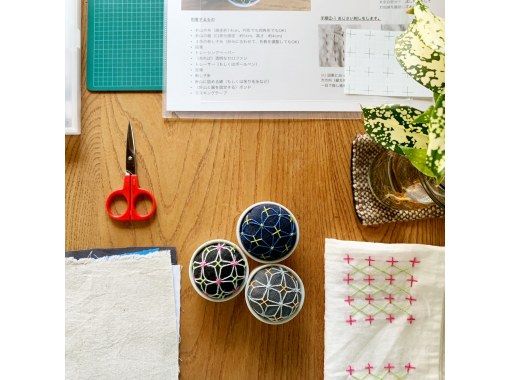
What you'll doYou have an experience of Sashiko embroidery stitching through making "Sashiko fukin"."Sashiko fukin" is known as dish towel in Japan and very popular Sashiko learning item for novices. This item is very practical. After finishing to make, you can use it as handkerchief, lunch mat, wrapping something like sandwich, flower base mat etc.The size is approx. 33cm×33cm.Although you cannot finish the stitching during the experience, you will get knowledge and skill how to complete it by yourself. Therefore you can enjoy the stitching even at home.Step 1: Choose a Sashiko pattern and a thread color.I've provided you with many sort of Sashiko cloths which is printed on a fabric and thread colors. Please enjoy picking your favorite one out.Step 2: Preparation.I introduce how to treat for a fabric and a thread before doing stitch.Step 3: Do Sashiko stitching.After showing my demonstration to you, you will start stitching on the cloth you chosen. This time makes you enjoy and relax!Step 4: Explain Sashiko basic role and tips.Before closing the session, I explain about general order of stitching, things to watch out for, tips and so on.
It was so fun learning how to do sashiko. The teacher was very friendly and professional, and took time with each student to help us
![[Tokyo, Ogikubo] Sashiko visible mending / darning / embroideryの画像](https://img.activityjapan.com/10/57928/10000005792801_3mqiyZ2h_3.jpg?version=1740133144)
- Age 15~Age 100
- 1~2 hours
- 10:30 / 11:00 / 11:30 / 12:00 / 12:30 / 13:00 / 13:30 / 14:00 / 14:30 / 15:00 / 15:30 / 16:00 / 16:30 / 17:00
There was a time when fabric and garment were very precious and hard to get. People who lived in north part of Japan needed to repair or mend for their garment and make protect from cold season. They stitched several layers of cloth carefully stitch by stitch. Sashiko is a technique that was born from this and nowadays become one of traditional handicraft which was born from taking good care of things and the wisdom of life. At that time, there were no schools, and Sashiko was passed down from parent to child. Therefore, there is not just one technique, but multiple techniques. The repair method is the same. Here we would like to introduce some of the sashiko mending and darning techniques. Please use it for various purposes such as repairing precious clothes, making use of leftover cloth, and making art. You can take the coaster away. Please enjoy the stitching!!
- Age 15~Age 100
- 1~2 hours
- 10:30 / 11:00 / 11:30 / 12:00 / 12:30 / 13:00 / 13:30 / 14:00 / 14:30 / 15:00 / 15:30 / 16:00 / 16:30 / 17:00
Sashiko is like Japanese embroidery. You have experience to make Sashiko needle mountain. The patten is "Hydrangea" pattern. It's a traditional Japanese pattern. === What you experience === Step 1: Choose a fabric and a thread color. Step 2: Transfer pattern on fabric. Step 3: Do Sashiko stitching. Step 4: Make needle mountain. Completed!! ========== You can take the needle mountain away. Please enjoy the stitching with it!!
I had a great time doing this sashiko workshop. Keiko was very kind and explained how to do things very well. It may be more difficult if you don't have any prior experience with hand sewing but it is still doable with some patience and concentration. We did not finish the project but were given instructions on how to finish the piece. You learn all the skills you will need in the time allotted. The shop was easy to find using the instructions given on the canoha website.

- Age 16~Age 60
- 1~2 hours
Mashoku is a physical practice that explores the "space between" (aida) through physical contact. Drawing on elements of martial arts and contact improvisation, it emphasizes the movement and sensations that emerge from relationships, rather than confrontation or manipulation. Neither dance nor martial arts, it is a space for improvisational physical dialogue centered on touch. The practice begins with breathing and progresses through quiet observation of the current state of mind and body. Next, through posture and weight transfer, we establish a foundation for a resilient and secure body. From there, we engage in light touch and mutual transfer, treating touch not as a means of movement but as a gateway to perception. Mashoku does not aim for smooth movement or a beautiful appearance. We embrace the tension and hesitation that arise when we touch, listening closely to the sense of distance and shifts in center of gravity between us. The resulting movement emerges naturally from the relationship in each moment, rather than following a predetermined pattern. Experience, age, and physical ability are all welcome. For those with martial arts experience, this is a learning opportunity to "let go of technique," while for those with experience in dance or other artistic expression, it is a place to deepen "safe and trustful improvisation." Even those who are anxious about physical contact can participate with peace of mind, as the process progresses in stages. Mantouch is not a place to try to change the other person. It is a quiet, open time to respect what happens "between" you and the other person, and to savor the relationship itself.
![[Tokyo/Nakano] Beginners welcome! Blowing glass experience class where children can participate! Recommended as a reward or gift for yourself! You can enjoy it with your family on a dateの画像](https://img.activityjapan.com/10/44369/10000004436901_EnxXBnxH_3.jpg?version=1666170482)
- Age 5~Age 79
- 1~2 hours
- 13:00 / 14:15 / 15:45 / 17:00
About 12 minutes on foot from Nakano Station in Tokyo! "Glass Classroom Nakamura" is holding a glassblowing experience class! Even if you are a beginner, the staff will carefully support you so you can participate with confidence. Children from 5 years old can participate, so it is recommended for making memories with your family or for your child's first challenge ♪ I will teach you how to make it from the basics! In addition, you can arrange colors, add handles, add bubbles, etc., so the finished glass is the only one in the world! ! A cup of that glass should surely be exceptionally delicious! Please feel free to apply! [Schedule] 1) Visit the store/reception 2) Decide on the design with the instructor while looking at the sample 3) Briefly explain about the experience 4) Pick up the next day in the afternoon. (Please pick up at the studio or choose shipping) *Experience time is scheduled for 30 to 40 minutes per person. We have many types available. You can use all colors for 550 yen.・With pedestal: 550 yen/piece ・With handle: 550 yen/piece ・Difficult design: 550 yen/piece ・Wire winding: 550 yen/piece I will engrave. [About receiving the work] The work will be cooled down over time in a dedicated kiln until the next morning. If you are in a hurry, you can pick it up after 13:00 the next day, but we recommend that you pick it up or ship it after a week, as we will process the bottom of the work (vases, glasses, etc.) that cannot be used if it is wobbly. . *Shipping fee: 770 yen nationwide. [Others]・Photos and videos can be taken◎・Service in English is also possible (Mondays and Saturdays) Please feel free to contact us.
適宜手を添えつつとても丁寧に教えていただき、息子も「楽しかった!」と言っていました。自由研究のために少しだけインタビューもさせてもらったのですが、こちらも親切にご対応いただきました。今回は撮影係で付き添った私(親)も、見ていると何か作ってみたくなりました。
![[Tokyo / Nakano] Self-help Karate Kimura Juku experience (both Japanese and foreigners are acceptable)の画像](https://img.activityjapan.com/10/23281/10000002328101_0iUYBi3M_3.jpeg?version=1653284468)
- Age 13~Age 60
- 1~2 hours
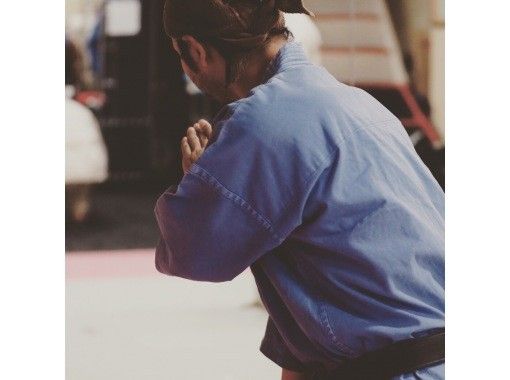
Through simple greetings and gestures in Japanese, you will learn Japanese-style etiquette. Respecting your opponent and learning to maintain a balanced posture are also important parts of training. Based on kata training, you will gradually master physical control, including striking, throwing, and ground techniques. Training focuses on using the body and distance, rather than relying solely on brute force. Through situational training based on realistic scenarios, you will learn practical self-defense techniques, such as how to maintain distance and how to protect yourself. If necessary, you will also practice weapons using sticks and wooden swords, with safety in mind.
- Age 7~Age 70
- Within 1 hour /1~2 hours
This private lesson is for those who wish to deeply experience Japanese martial arts, self-defense, and bodywork, rather than merely a tourist attraction. Rather than wearing ninja or samurai costumes and rehearsing forms, this lesson directly engages with the embodied knowledge that transcends words, such as "body usage," "distance," "breathing," and "tactile awareness," cultivated in Japan. The lesson begins with a careful re-establishment of one's own physical sense through breathing, ascertaining one's current physical state. Based on this, participants will experience the "resilient stance," "movement without relying on force," and "a state of being that avoids conflict with the opponent or the environment," all tailored to their individual level and goals. No prior combat or athletic experience is required. The content is tailored to each individual, flexibly combining martial arts-inspired body control, practical self-defense, and contact-based bodywork. This lesson offers a safe and secure learning environment that captures the essence of Japanese physical culture—feeling, receiving, and moving in relationship, rather than controlling through force. The goal of this lesson is not to become stronger or to memorize techniques. We believe it is important that you trust your body and take away the ability to respond calmly to any situation. Even a short session will be an experience that will change your everyday posture, movements, and sense of distance from others. This is a quiet and deep study of the body that can only be experienced in Japan. We look forward to your private lesson just for you.
![[Tokyo / Nakano] Approach Self-Defense Swastika -MANJI- Experience (for Japanese)の画像](https://img.activityjapan.com/10/23282/10000002328201_0iUYBi3M_3.jpeg?version=1653285008)
- Age 12~Age 55
- 1~2 hours
Manji (卍) is a self-defense technique designed to deal with realistic dangers that occur at close range. It simulates situations where you cannot create distance from your opponent, such as being suddenly touched, pushed, or grabbed, and aims to protect yourself without relying on strength or physical differences. Practice begins with regulating your breathing and posture and understanding your own physical and mental state. You will develop a physical sense of calm and accepting the situation, preventing tension or fear from freezing your movements. Then, rather than facing your opponent's force head-on, you will respond safely using principles such as deflecting, escaping, and surrendering. We use elements such as striking, throwing, breaking, and ground techniques across the situation, emphasizing constant change without being bound by kata. The goal is not to win or dominate, but to minimize danger and increase options for ending a situation. We also explore applications using everyday clothing, towels, and familiar tools, and in some cases, even touch upon the concepts of simple weaponry. While beginners can safely participate regardless of age or athletic experience, experienced practitioners can also learn to redefine their physical qualities. Close-combat self-defense is not a technique for gathering skills. It is a practical physical technique for developing the ability to trust your body and bounce back even in the midst of chaos.
![[Tokyo, Nakano] Nakano Ninja Group Kagetoの画像](https://img.activityjapan.com/10/23280/10000002328001_y0UZphL0_3.jpeg?version=1653284166)
- Age 6~Age 75
- 1~2 hours
The Nakano Ninja Group, Kageto, is a group that embodies ninja as a way of life, not as a "playing role." Rather than focusing on shuriken throwing, flashy action, or reenacting stories, we value applying the physical senses, observational skills, and interaction with the environment that ninjas traditionally possessed to modern times. Training begins with correcting breathing and posture, and assessing one's own physical and mental state. We then carefully hone the fundamentals of "ninjutsu," such as reading and hiding signs, moving silently, and using the body for long, comfortable movements. The core of Kageto's ninjutsu lies in the wisdom to overcome situations without aggravating them, rather than overpowering with force. Our training incorporates a cross-section of martial arts-style body control, self-defense distance, and bodywork that elicits natural movements. Regardless of age or athletic experience, we offer training tailored to each level, from beginners to experienced practitioners. This is not a place for competition, but rather a place to quietly reflect on oneself and hone one's senses. The Kageto aims not to show off strength, but to foster a resilient and resilient life force. Through the wisdom of the ninja, the way we walk, our posture, and even the distance we maintain from others will change. A modern-day ninja training ground, Kageto lives on in the streets of Nakano. Quietly but surely, it continues to exist.
![[Nakano, Tokyo] Introducing the real techniques of martial arts "Samurai & Ninja Experience" (foreigner version)の画像](https://img.activityjapan.com/10/23279/10000002327901_y0UZphL0_3.jpeg?version=1653283865)
- Age 6~Age 75
- 1~2 hours
This private, small-group experience program allows participants to understand Japanese ninja and samurai culture through their bodies, rather than simply experiencing the costumes and performances. Rather than the flashy image of ninjas and samurai portrayed in movies and anime, participants will learn the physical senses required for survival and the quiet way of controlling situations that they actually possessed. Rather than combat techniques, participants will learn how to use their bodies to "disguise their presence," "move without fatigue," and "avoid increasing danger." The focus is on walking, standing, shifting one's center of gravity, and using one's gaze and breathing, all of which are applicable to modern cities. Rather than simply donning ninja attire and striking a pose, participants will gain a holistic understanding of the meaning of "ninja." Rather than simply swinging a sword, participants will focus on posture, distance, and resolve. Experience the serenity and dignity that samurai valued through physical manipulation to avoid clashing with opponents, maintain a calm atmosphere, and maintain one's composure. While wooden swords and other weapons may be used as needed, the goal is not to win, but to cultivate a stable presence. Lessons begin with breathing exercises and proceed safely, assessing the participant's physical and mental state for the day. No age or athletic experience is required. Rather than an experience to show off your strength, we value the opportunity for you to take home the "physical knowledge" that lies deep within Japanese culture. Experience the essence of real ninjas and samurai that you won't get to experience through sightseeing. We offer a quiet, profound experience that is unique to Japan.
![[Tokyo, Nakano] Why not gather around the table to enjoy some Japanese home cooking?の画像](https://img.activityjapan.com/10/55034/10000005503401_1IgGyMt8_3.png?version=1719810549)
- Age 12~Age 80
- 3~4 hours
Dashi is the lifeblood of Japanese cuisine. We'll start with an easy way to make dashi at home. The dishes you'll learn will be boiled fish, simmered dishes, grilled dishes, steamed dishes, and salads (plus rice and miso soup). Start cooking efficiently while thinking about the steps involved. Cooking is all about making the food colorful, presentable, and plated. Now! It's finished. Gather around the table while it's still warm. Serving the food is also important (the direction and location of the plates). Learn table manners too. Food that you've taken the time and effort to make yourself should be delicious. ★Basically we only speak Japanese, but please let us know when you make a reservation. We will do our best to accommodate you, so thank you★★Please feel free to ask us about anything else★
![[Tokyo/Suginami] Beginners welcome! Enjoy the empty-handed tsumami craft experienceの画像](https://img.activityjapan.com/10/56431/10000005643101_AVWlGGNt_3.jpg?version=1727838424)
- Age 6~Age 80
- 1~2 hours
- 10:00 / 11:00 / 12:00 / 13:00 / 14:00 / 15:00
This is a tsumami zaiku workshop held in a home studio. Even beginners can participate with confidence and create original works. Experience the fun of making items that can be used in daily life while feeling close to traditional Japanese techniques. Children can join in the experience.
![[Tokyo Suginami] Let's make stained glass works with "marine glass", a gift from the sea!の画像](https://img.activityjapan.com/10/13683/10000001368301_OuMcNAi7_3.jpeg?version=1581302848)
- Age 10~Age 100
- 3~4 hours
- 13:00
By, for example, to the material seagrass and shells that reached the sea, arrange a technique to make a stained glass. The difference between the normal of stained glass is to use a "gift from the sea" natural materials. You can finish easily be beginners. Is a guarantee that the new nice impression is born!
![[Tokyo Suginami] Let's make a lampshade with "marine glass", a gift from the sea! (2 hours course, 3 hours course)の画像](https://img.activityjapan.com/10/13682/10000001368201_OuMcNAi7_3.JPG?version=1581302773)
- Age 0~Age 100
- 2~3 hours /3~4 hours
- 13:00
At the "NPO Nippon Zen Art Association", you can experience making lamp shades using "Marine Glass". There are two-hour and three-hour courses, so please choose one.
![[Tokyo Suginami] who want to dive after a long time is here! Scuba the review program courseの画像](https://img.activityjapan.com/10/7717/10000000771701_qSeu696w_3.jpg?version=1508246953)
- Age 10~Age 100
- 4~5 hours
The scuba the review program is a course for the blank diver. Because it does not have a few years diving it was to get the license have forgotten the way of diving. But are scheduled to dive abroad is the course of the person that anxiety to carry out suddenly. This course will be asked to confirm the skills you have made in open water training to use the pool again.
![[Tokyo Suginami] PADI Open Water Diver course [licensing]の画像](https://img.activityjapan.com/10/7706/10000000770601_tpWJWkKP_3.jpg?version=1508246953)
- Age 10~Age 100
- Over 6 hours on the day
The PADI Open Water is not a buddy with the Instractor (2 people more Together with the team Diving You will be able to do it. underwater It is a course of the diver who can taste the impression of the world. The schedule for this course consists of "knowledge development", "pool dive" and "ocean training". Course content: 5 sessions for knowledge development, 5 sessions for pool and dive, 4 dives for ocean training.
![[Tokyo Suginami] PADI Scuba Diver course [licensing]の画像](https://img.activityjapan.com/10/7680/10000000768001_zY1hmOPs_3.jpg?version=1508246953)
- Age 10~Age 100
- Over 6 hours on the day
Do not have the time I want to training is a chance and accepted the diving! Is there no way to begin a more easy to dive? Also to enjoy the diving, anxiety and there are no leaders who still become Insurakuta and dependable. It is a Scuba Diver course for such people. Course content: knowledge development 3 sessions, pool dive 3 session, will be the marine training two dives.
Search by recommended experience






最近チェックしたプラン
Please wait a moment